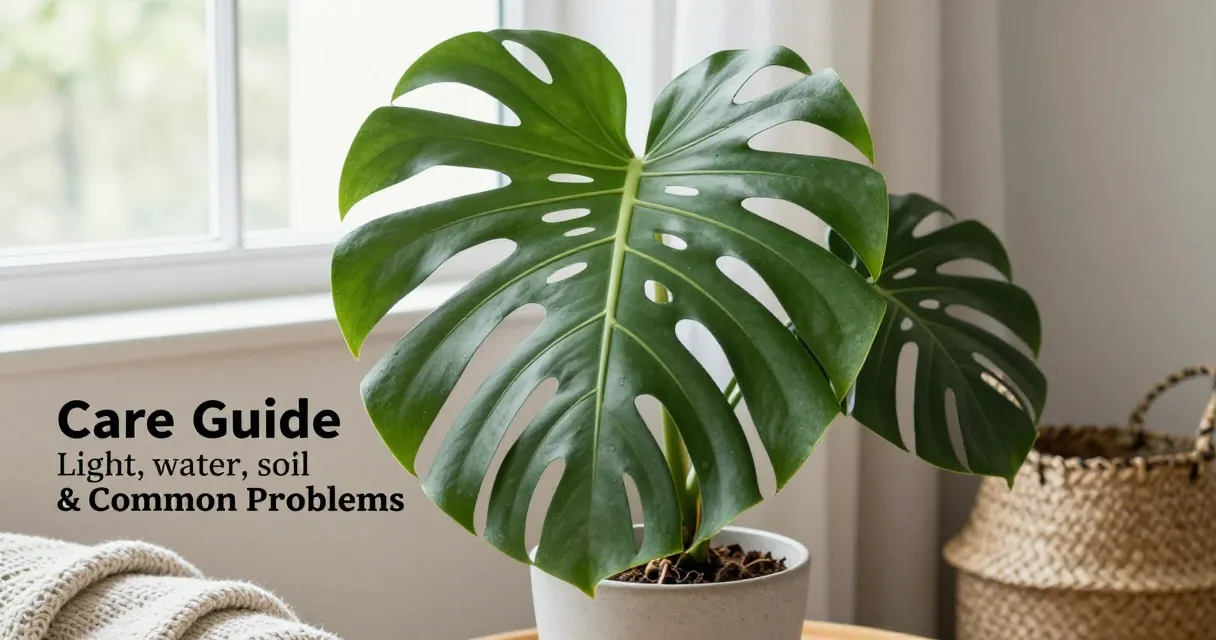
Monstera Deliciosa Care Guide: Light, Water, Soil & Common Problems
Monstera deliciosa is one of the most recognizable houseplants in the world, those split, fenestrated leaves are practically a design icon. But the plant’s popularity comes with a lot of bad advice circulating online. According to a 2023 survey by the National Gardening Association, overwatering is the leading cause of death for 65% of indoor tropical plants, and monstera is no exception.
Get the fundamentals right, and your monstera will push out dramatic new leaves nearly every month during the growing season. Get them wrong, and you’ll spend a lot of time wondering why the leaves are yellow or why nothing seems to be splitting.
This guide covers everything you need to know: the right light, how often to water, what soil mix to use, humidity needs, toxicity, propagation, and how to fix the most common problems. It also includes a month-by-month care calendar and a leaf problem diagnosis chart that most guides skip entirely.
Light Requirements
Monstera deliciosa is native to the tropical rainforests of southern Mexico and Central America, where it grows as an understory climber, reaching up through gaps in the forest canopy. This origin tells you everything about its light needs: bright, indirect light rather than harsh direct sun.
Ideal light: Bright indirect light for 4–6 hours per day. A spot a few feet back from a south or east-facing window is ideal. North-facing windows rarely provide enough light; your monstera will survive but grow slowly and produce leaves without the characteristic holes (fenestration).
Too much direct sun: The leaves scorch, turning pale, then developing brown patches and crispy edges. A sheer curtain can diffuse intense afternoon light from a west-facing window in summer.
Too little light: Growth slows dramatically. New leaves emerge small and without holes. The plant won’t die quickly in low light, but it won’t thrive. If your monstera has been producing small, unfenestrated leaves, inadequate light is usually the culprit.
Quick rule: If you can comfortably read a book in that spot without a lamp, your monstera will likely do fine there.
“Monstera absolutely needs that indirect bright light to truly thrive indoors. It’s one of those plants where moving it just two feet closer to a window can completely transform its growth pattern.” (Christopher Satch, plant scientist and author of The New Plant Parent)
Watering Schedule
Overwatering is the single most common mistake with monstera, and the most damaging. Roots need oxygen, and soil that stays wet for too long creates anaerobic conditions, leading to root rot, which kills the plant from the ground up and often shows up first as yellowing leaves.
How often to water: In spring and summer (active growing season), water every 7–10 days. In fall and winter, reduce to every 14–21 days. These are starting points. Always check the soil before watering.
The finger test: Push your finger 2 inches (5 cm) into the soil. If it’s still moist, wait. If it’s dry at that depth, it’s time to water.
How to water: Water thoroughly until it drains out of the bottom of the pot. Then let the plant drain completely. Never leave monstera sitting in standing water. Bottom watering (setting the pot in a tray of water for 20–30 minutes) works well for deep, even soil hydration.
Seasonal watering comparison:
| Season | Frequency | Soil Check |
|---|---|---|
| Spring / Summer | Every 7–10 days | Top 2" dry |
| Fall | Every 12–14 days | Top 2" dry |
| Winter | Every 14–21 days | Top 2–3" dry |
Signs of overwatering: Yellow leaves (especially lower ones), soft stems near the base, soggy soil that stays wet for more than 10 days, musty smell from the pot.
Signs of underwatering: Dry, crispy leaf edges, soil pulling away from the sides of the pot, leaves that feel thin or slightly limp.
Soil Mix
Monstera needs well-draining soil that holds some moisture but never becomes waterlogged. Standard potting mix alone retains too much water and compacts over time, cutting off airflow to the roots.
Recommended DIY aroid mix:
- 40% regular potting mix
- 30% perlite or pumice (for drainage)
- 20% orchid bark (for air pockets around roots)
- 10% worm castings or compost (for nutrition)
If you’d rather buy pre-made: look for an “aroid mix”, formulated for monstera, philodendrons, pothos, and similar tropical plants. Compared to standard potting mix, aroid mixes drain 3–5 times faster while still retaining adequate moisture.
Soil pH: Monstera prefers slightly acidic to neutral soil, around pH 5.5–7.0.
When to repot: When roots are visibly circling the bottom, pushing through drainage holes, or when water runs straight through the pot without being absorbed. Typically every 1–2 years for younger plants; mature monsteras can go 3+ years between repots.
Humidity and Temperature
Humidity: Monstera thrives at 60–80% relative humidity, similar to its native rainforest habitat. Most homes run at 30–50%, which is tolerable but will result in slower growth and occasional brown leaf tips.
Ways to increase humidity around your plant:
- Group plants together: creates a shared microclimate
- Pebble tray: place the pot on a tray of water-filled pebbles (the water evaporates around the plant without roots sitting in it)
- Humidifier: the most effective method; a small cool-mist humidifier near your plants makes a measurable difference
- Misting: provides temporary humidity but dries out too quickly to make a lasting impact
Temperature: Keep monstera between 65–85°F (18–30°C). It’s not frost-tolerant at all. Temperatures below 50°F (10°C) will damage leaves. Keep it away from cold drafts, AC vents, and heating vents, which dry the air and cause stress.
Fertilizing
During the active growing season (spring through early fall), fertilize monthly with a balanced liquid fertilizer diluted to half strength. A 20-20-20 NPK formula is a reliable choice.
In fall and winter, stop fertilizing entirely. The plant is in a rest period and can’t use the extra nutrients. Overfeeding in winter causes salt buildup in the soil that damages roots over time.
“I see so many monstera problems that trace back to over-fertilizing during the winter dormancy period. Less is genuinely more with tropical aroids during their rest cycle.” (Darryl Cheng, author of The New Plant Parent and creator of House Plant Journal)
Signs of nutrient deficiency: Pale new leaves, slow growth even in peak season, or yellowing between the leaf veins (interveinal chlorosis, which often indicates magnesium deficiency specifically; a dose of Epsom salt solution can help).
Aerial Roots: What to Do With Them
Monstera produces thick, cord-like aerial roots from its stem nodes. In the wild, these roots anchor the plant to trees and absorb moisture from the air. Indoors, many owners aren’t sure what to do with them.
Options:
- Leave them alone: they’re normal and healthy
- Direct them into the soil: they can absorb water and nutrients
- Train them onto a moss pole: the roots will grip and the plant will grow larger leaves
- Do not cut them off unless they’re damaged; removing healthy aerial roots stresses the plant
Support: Moss Poles and Stakes
Monstera is a natural climber. In the wild, it uses its aerial roots to scale trees and grow upward toward light. Indoors, giving it something to climb makes a genuine difference in leaf size and fenestration.
A moss pole or coir pole encourages upward growth, which leads to larger leaves with more splits and holes. Research on climbing aroids shows that staked monsteras develop leaves up to 40% larger than those left to sprawl horizontally.
Insert a moss pole next to the main stem and loosely tie the stems to it with soft plant ties. The plant will naturally grow toward and around it.
Toxicity
Monstera deliciosa is toxic to cats, dogs, and humans if ingested. All parts of the plant contain calcium oxalate crystals, which cause oral irritation, excessive drooling, vomiting, and difficulty swallowing. It’s not typically fatal, but it’s painful and can be dangerous for small pets or young children.
Keep monstera out of reach of pets and children. If ingestion occurs, contact your veterinarian or Poison Control immediately.
Propagation
Monstera is one of the easiest tropical plants to propagate. The most reliable method is stem cuttings in water or soil.
Steps:
- Cut a stem section that includes at least one node (the thickened joint where a leaf or aerial root emerges)
- A leaf is helpful but not required; the node is what matters
- Place the cutting in water (change weekly) or directly into moist potting mix
- Keep in bright indirect light and high humidity
- Roots typically appear within 2–6 weeks in water; slightly longer in soil
- Once roots are 2–3 inches long, pot up in aroid mix
Month-by-Month Monstera Care Calendar
Most care guides give you the same generic advice year-round. But monstera has clear seasonal rhythms, and matching your care to those rhythms makes a real difference. Here’s exactly what to do each month.
| Month | What to Do |
|---|---|
| January | Water sparingly (every 18–21 days). No fertilizer. Watch for dry air from heating. Consider a humidifier. Wipe leaves with a damp cloth to remove dust. |
| February | Same as January. Start watching for signs of new growth as days lengthen. If you see a new unfurling leaf, that’s your signal the plant is waking up. |
| March | Growth begins to pick up. Resume fertilizing at half strength once you see new leaves actively unfurling. Increase watering frequency slightly to every 12–14 days. |
| April | Peak growth begins. Water every 10–12 days. Fertilize monthly. If the plant hasn’t been repotted in 2+ years, spring is the ideal time. Do it now before the big growing season push. |
| May | Full growing season. Water every 7–10 days (use the finger test). Fertilize monthly. Good time to train new growth onto a moss pole. |
| June | Check for pests: spider mites and mealybugs are more active in warm weather. Inspect leaf undersides weekly. If outdoors temperatures are above 60°F, you can move the plant outside to a shaded spot. |
| July | Hottest month for most homes. Watch for underwatering signs (drooping, dry leaf edges). May need to water every 5–7 days in very warm, dry conditions. |
| August | Continue full care. Start looking at the pot. If roots are crowding out of drainage holes, repot before growth slows in fall. |
| September | Begin tapering off. Reduce fertilizing to half strength. Watering frequency starts to drop as growth slows. |
| October | Stop fertilizing. Water every 12–14 days. Bring any outdoor monstera inside well before the first cold snap. |
| November | Rest period begins. Water every 14–18 days. Move the plant away from heating vents, which drop humidity drastically. |
| December | Minimal water (every 18–21 days), no fertilizer. Clean leaves, check for pests. A slow, quiet month: let the plant rest. |
Leaf Problem Diagnosis: What’s Actually Wrong
When something goes wrong with a monstera, the leaves tell you. But the same symptom can have multiple causes, which is why most troubleshooting advice is frustratingly vague. This chart gives you a faster diagnosis path.
Step 1: What does the leaf look like?
Yellow Leaves
Check the soil first. Is it wet or dry?
-
Wet soil + yellow leaves = Overwatering or root rot. Stop watering immediately. Check the roots : if they’re brown and mushy (not firm and white), you have root rot. Trim the affected roots with sterile scissors, let the root ball air-dry for a few hours, and repot in fresh aroid mix.
-
Dry soil + yellow leaves = Underwatering is less common but possible. Water thoroughly and monitor. If the plant perks up within a day, that was the issue.
-
Moist soil (normal) + yellow lower leaves = Natural aging. Oldest leaves at the base yellow and drop over time. One or two yellow lower leaves is normal, especially in fall.
-
Yellow leaves with green veins (interveinal chlorosis) = Nutrient deficiency, often magnesium. Try adding a small amount of Epsom salt (1 teaspoon per gallon of water, once a month in growing season).
-
New yellow leaves = Almost always overwatering, low light, or root rot. Check all three.
Brown Leaves
-
Brown tips only = Low humidity or inconsistent watering. The tips are the farthest point from the roots and show stress first. Raise humidity and establish a regular watering schedule.
-
Brown edges all around a leaf = Fertilizer burn (too much or too strong) or fluoride sensitivity (use filtered or rainwater if your tap water is heavily treated).
-
Brown patches in the middle of a leaf = Sunburn. Spots appear bleached or papery with a clear edge. Move the plant out of direct sun.
-
Brown patches + yellow halo around them = Bacterial infection, often from overwatering and poor air circulation. Cut the affected leaf, let the soil dry out significantly, and improve airflow.
-
Brown mushy base of the stem = Root rot that has progressed to stem rot. This is serious and often fatal if caught late. Cut back to healthy tissue (firm and green), let it dry, and attempt propagation of any healthy nodes before the whole plant is lost.
Drooping Leaves
-
Dry soil + drooping = Needs water. Water thoroughly and most monsteras perk back up within a few hours.
-
Wet soil + drooping = Overwatering. Roots can’t take up water when they’re waterlogged. Let the soil dry out completely before the next watering.
-
Newly repotted plant drooping = Transplant shock. Normal for 1–2 weeks. Keep out of direct sun and don’t fertilize until new growth appears.
No Holes in New Leaves
This is the most common complaint from new monstera owners.
-
Plant under 2–3 years old = Fenestration is developmental. Young plants produce smaller, uncut leaves by design. It’s not aproblem. That’s just normal developmenty.
-
Mature plant, no holes = Insufficient light is the culprit 80% of the time. Move to a significantly brighter spot. Also consider adding a moss pole, as climbing triggers the plant to produce more mature, fenestrated leaves faster.
-
Leaves getting smaller over time = Usually a combination of low light and the plant running out of root space. Brighter light and a repot often reverse this quickly.
Common Problems Quick Reference
| Problem | Most Likely Cause | Fix |
|---|---|---|
| Yellow lower leaves | Normal aging or overwatering | Check soil; let dry if wet |
| All leaves yellowing | Overwatering / root rot | Check roots, repot if rotted |
| Brown tips | Low humidity / inconsistent watering | Humidifier + regular schedule |
| Brown patches | Sunburn or bacterial infection | Move from direct sun; improve airflow |
| Drooping (dry soil) | Underwatering | Water thoroughly |
| Drooping (wet soil) | Overwatering / root rot | Let dry; check roots |
| No fenestration | Age or low light | More light + moss pole |
| White fuzzy patches | Mealybugs | Rubbing alcohol + neem oil |
| Fine webbing on leaves | Spider mites | Neem oil spray, increase humidity |
| Brown bumps on stems | Scale insects | Rubbing alcohol, systemic insecticide |
| Musty smell from soil | Root rot | Check roots; repot in fresh mix |
Quick Reference: Monstera Deliciosa Care Summary
| Care Factor | Requirement |
|---|---|
| Light | Bright indirect, 4–6 hrs/day |
| Watering | Every 7–10 days (summer), 14–21 days (winter) |
| Soil | Well-draining aroid mix |
| Humidity | 60–80% (minimum 40%) |
| Temperature | 65–85°F (18–30°C) |
| Fertilizer | Monthly half-strength (spring–fall), none in winter |
| Repotting | Every 1–2 years |
| Toxicity | Toxic to cats, dogs, and humans |
🌿 Need reminders tailored to your exact plant setup?
KnowYourPlant tracks your species, pot size, and season to tell you exactly when to water and what to fix.
Try KnowYourPlantFrequently Asked Questions
How fast does monstera deliciosa grow? In ideal conditions (bright indirect light, regular watering, warm temperatures), monstera pushes out 1–2 new leaves per month during spring and summer. Growth slows significantly in fall and winter.
Why doesn’t my monstera have holes? Fenestration (the leaf splits and holes) typically develops after the plant matures, usually after 2–3 years of growth. If your plant is young, patience is the answer. If it’s mature but still not splitting, the most common cause is insufficient light. Move it to a brighter spot.
How big does monstera deliciosa get indoors? Indoors, most monsteras reach 6–10 feet tall, with leaves up to 18 inches wide. Outdoors in tropical climates, they can grow to 30 feet or more. Container size limits root growth, which naturally keeps indoor plants more manageable.
Is monstera deliciosa toxic to cats and dogs? Yes. All parts of the plant contain calcium oxalate crystals that cause oral irritation, drooling, and vomiting in pets. Keep it out of reach of animals and small children.
Why are my monstera leaves turning yellow? The most common cause is overwatering. The roots can’t breathe in waterlogged soil. Other causes include too little light, nutrient deficiency (especially magnesium), or natural aging of older leaves at the base. Check the soil moisture first before adjusting other factors.
Can monstera grow in low light? Monstera will survive in low light but won’t thrive. Growth becomes very slow, new leaves come in small and without fenestration, and the plant becomes more susceptible to overwatering because the soil takes longer to dry. Bright indirect light produces the best results.
How do I know when to repot my monstera? Look for roots circling the bottom of the pot, growing out of drainage holes, or pushing up through the soil surface. Another sign: water runs straight through without being absorbed. Repot in spring, going up one pot size (usually 2 inches larger in diameter).
What should I do with monstera aerial roots? Leave them or direct them into the soil or onto a moss pole. Aerial roots are normal and healthy, so don’t cut them off unless they’re damaged. They can absorb moisture and help anchor the plant.
Can I put monstera outside in summer? Yes, in temperatures above 60°F (15°C). Place it in a shaded or dappled-light spot outdoors, as direct outdoor sun will scorch the leaves quickly. Bring it back indoors before temperatures drop below 55°F in fall.
Monstera deliciosa rewards consistent, patient care more than any special treatment. Bright indirect light, well-draining soil, and a conservative watering schedule will take you 90% of the way. Add a moss pole and some humidity, and you’ll have a plant that grows noticeably from month to month.
Looking for a care routine you don’t have to think about? Download the KnowYourPlant app , it tracks your specific monstera and sends personalized watering reminders based on your home environment, pot size, and season.